In the stillness of the African bush, a lone African elephant stands beside the lifeless body of a companion. There is no urgency, no movement—only a quiet presence that feels heavy with meaning.
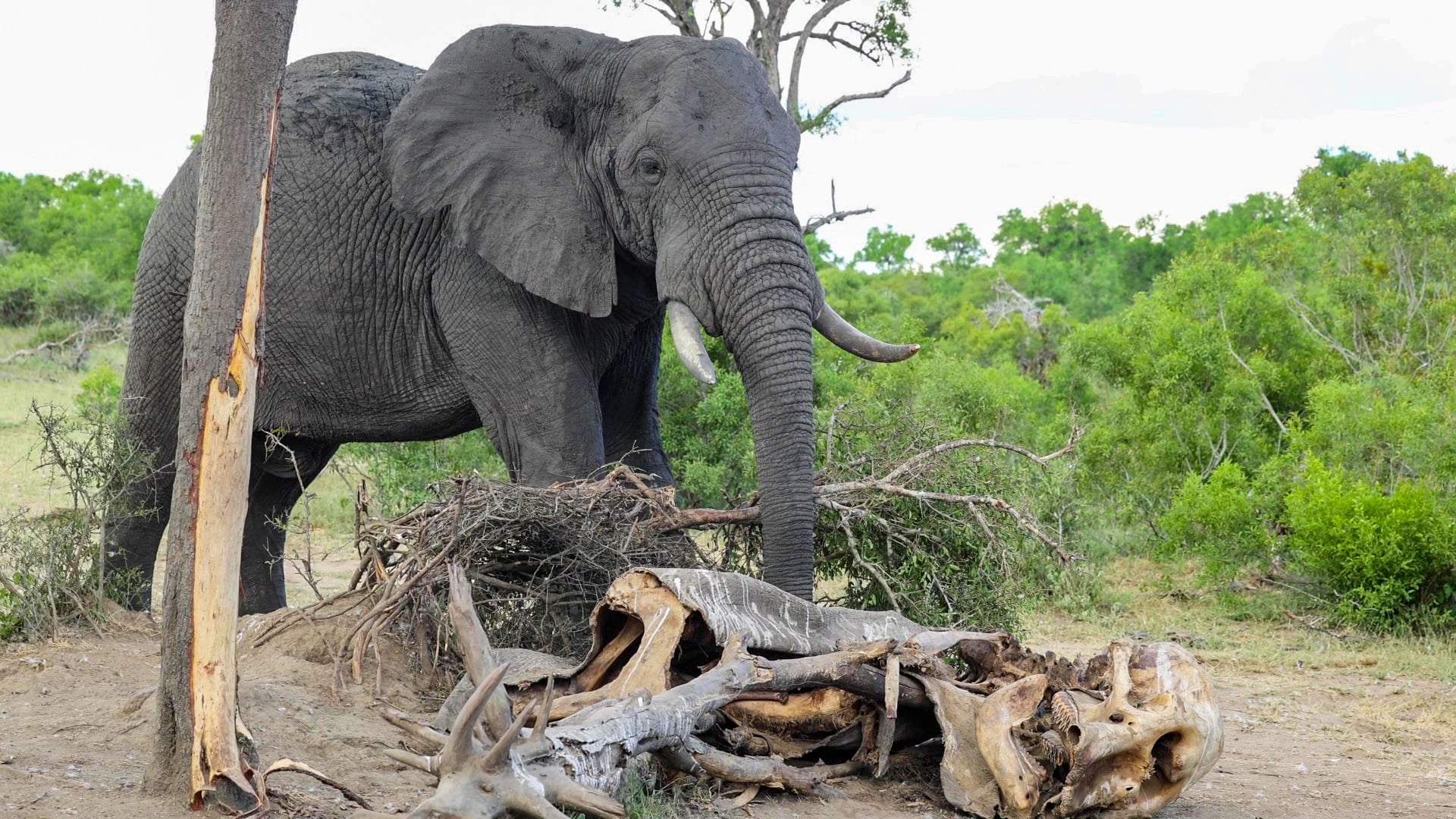
This is not just another moment in the wild.
It is something deeper.
Elephants are known for their strong family bonds, living in close-knit groups led by a matriarch, where relationships can last a lifetime. So when one is lost, the absence is not unnoticed—it is felt.
Gently, the elephant reaches out with its trunk.
Slowly, carefully, it touches the body—exploring the face, the tusks, the familiar shape that no longer responds. Its trunk, sensitive and precise, seems to search for something… recognition, perhaps, or understanding.
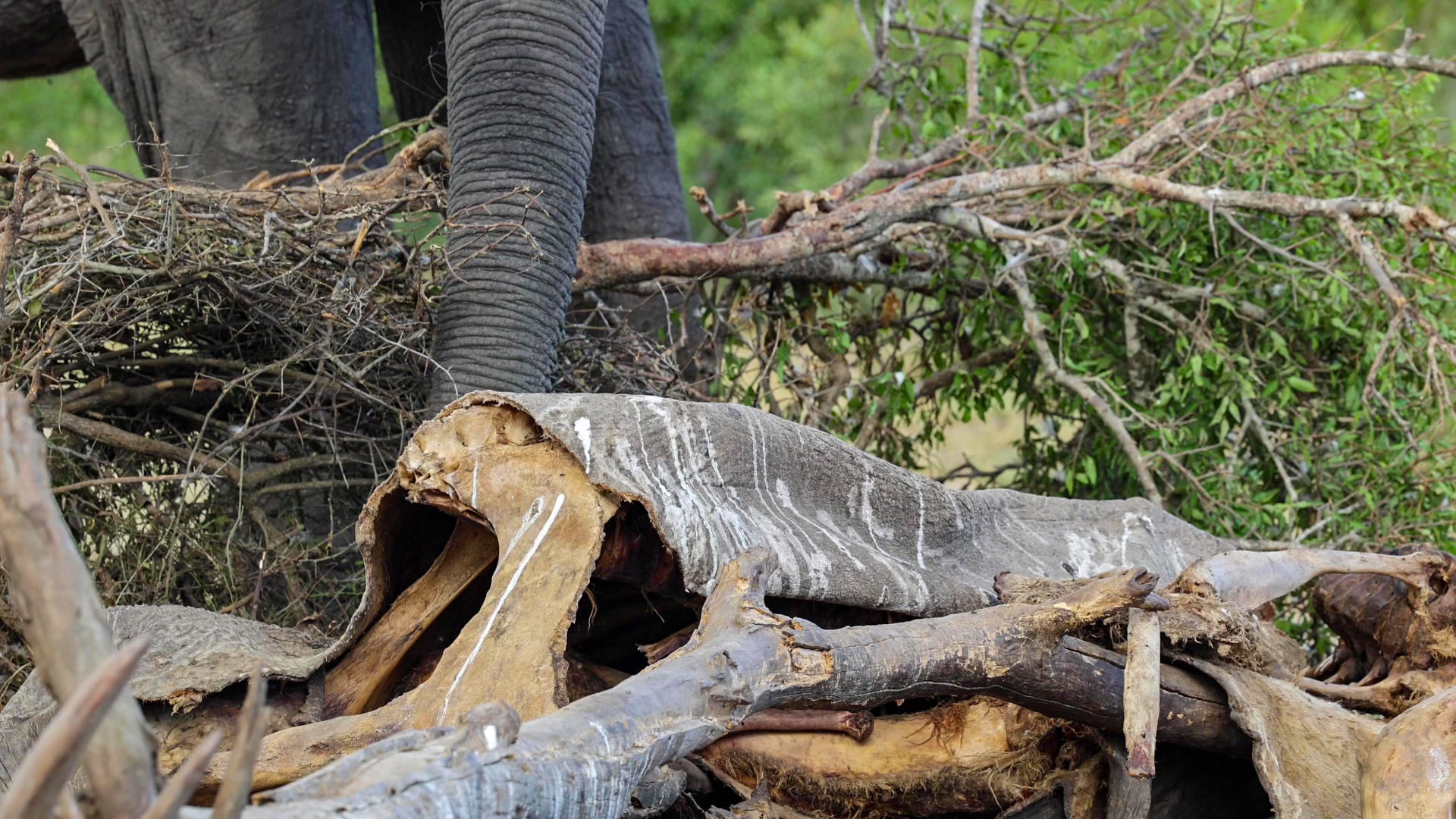
But there is only silence.
And still, it stays.
Unlike its usual active nature, the elephant lingers quietly beside its fallen friend. Time seems to stretch. There is no feeding, no movement forward—just presence. A quiet vigil in a place where life has paused.
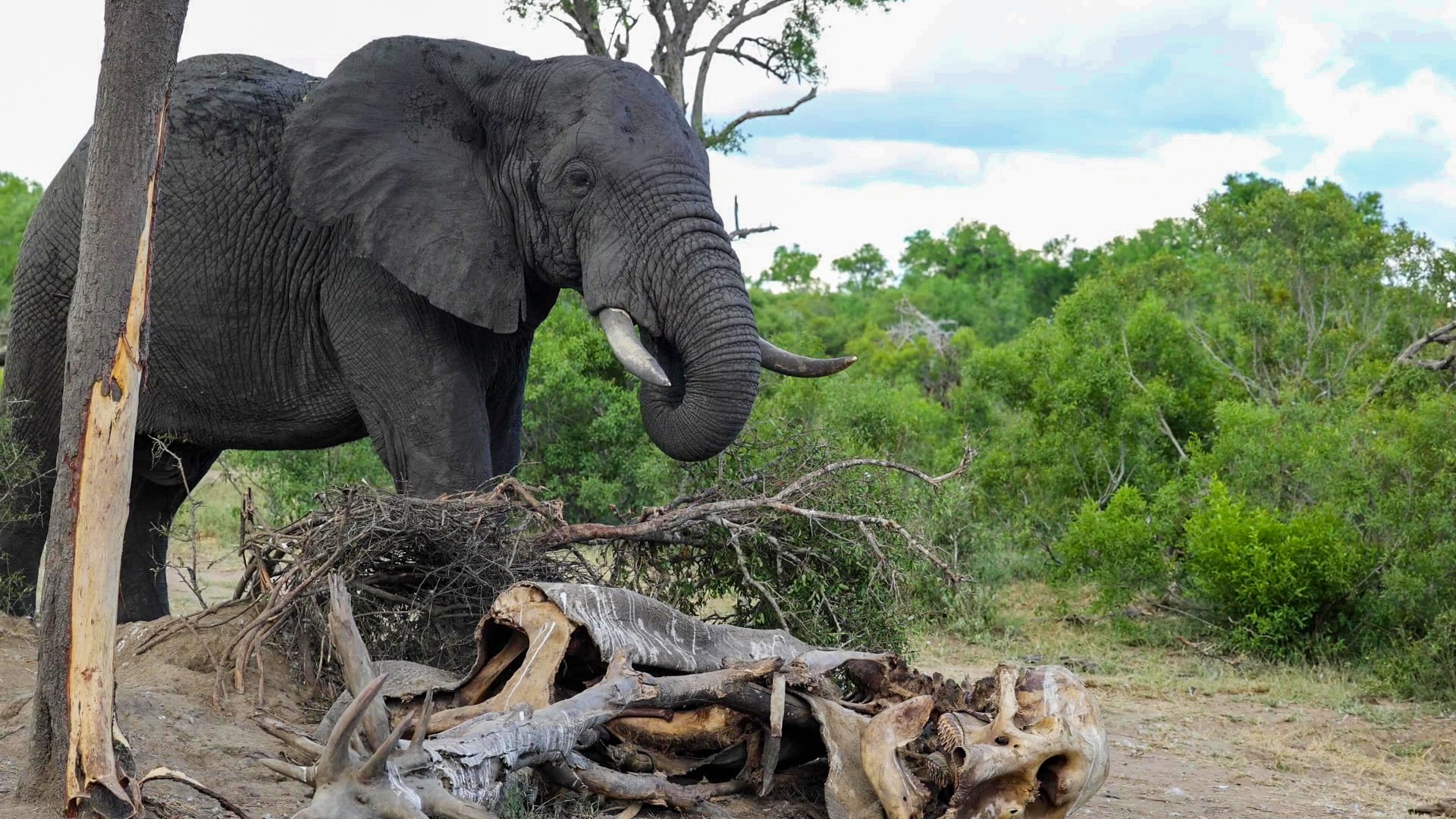
This behavior is not unusual for elephants.
They have been observed returning to the same spot again and again, even long after the body is gone. They interact with bones, lift them gently, sometimes carrying them for short distances—as if memory itself has weight.
Scientists hesitate to call it grief in human terms.
But what we see is unmistakable: recognition, attachment, and a profound change in behavior. A response that echoes something deeply emotional—something that connects across species.
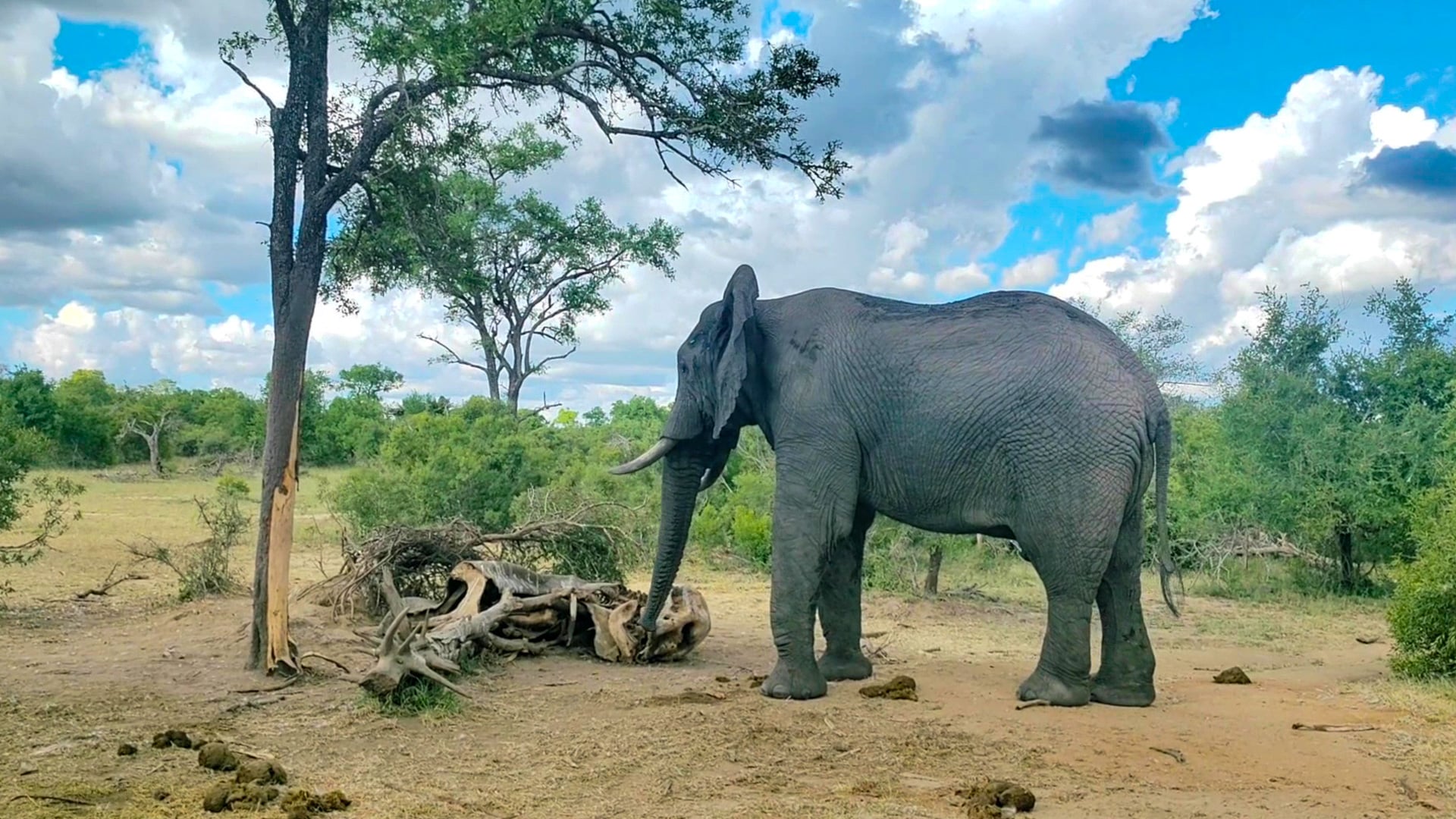
Eventually, the elephant will leave.
But not completely.
Because in the world of elephants, some bonds don’t end when life does.
