In the dry heat of the African bush, something feels off.
A blur of movement cuts through the trees—fast, urgent, out of place. As the shape becomes clear, a Leopard emerges, running hard in broad daylight. For a creature built on stealth and silence, this alone signals trouble.
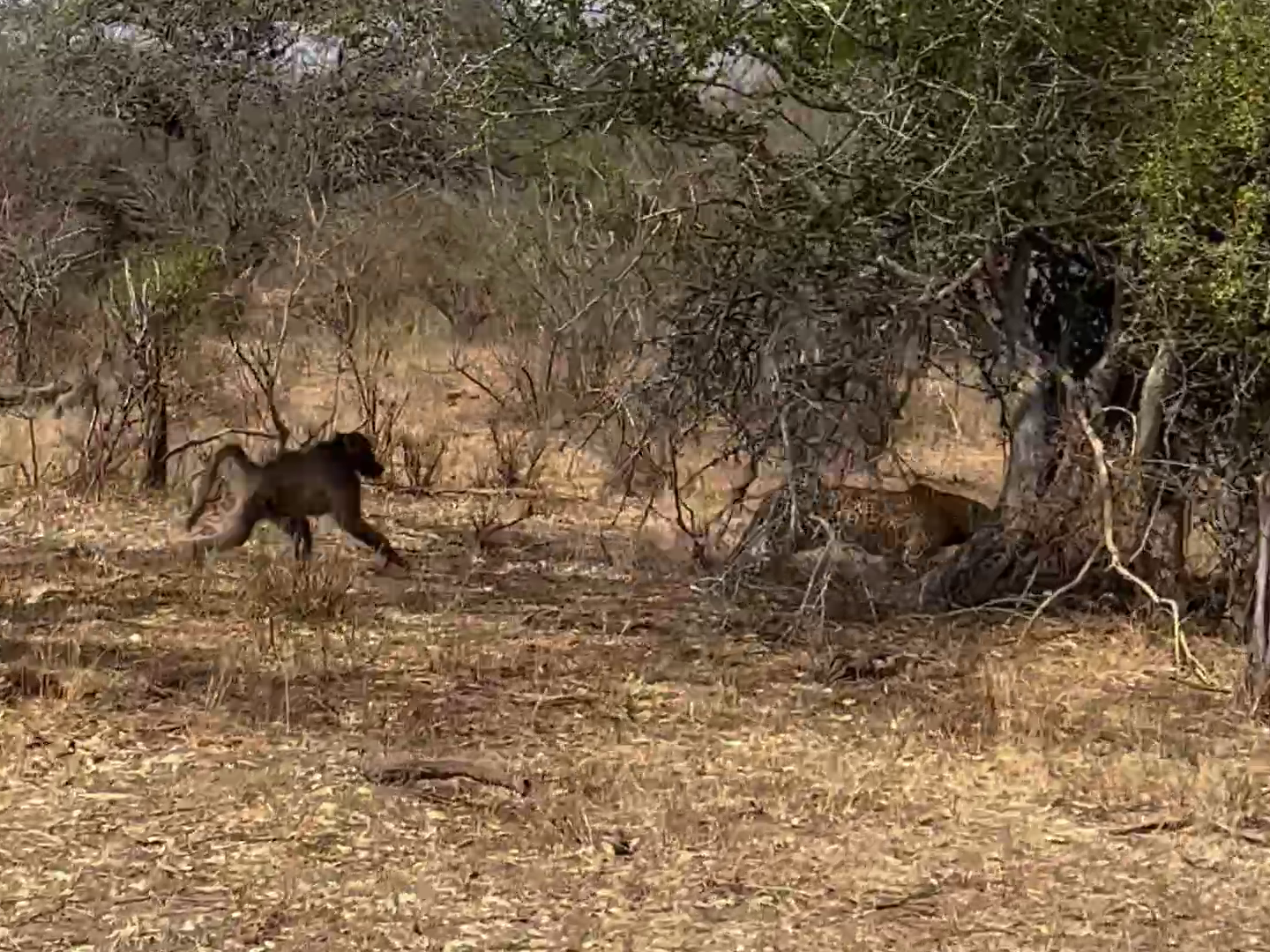
And then, the reason appears.
Behind it, relentless and fearless, charges a Baboon.
But this is no ordinary chase.
The leopard—usually the silent predator, the unseen shadow—is now fleeing. Its camouflage, once its greatest strength, means nothing in the open. It runs not to hunt, but to escape.
The baboon closes in.
What begins as a single pursuer quickly turns into something more. Others join. A troop forms, united by instinct and survival. These primates know exactly what this leopard represents—a deadly threat to their young, their family, their future.
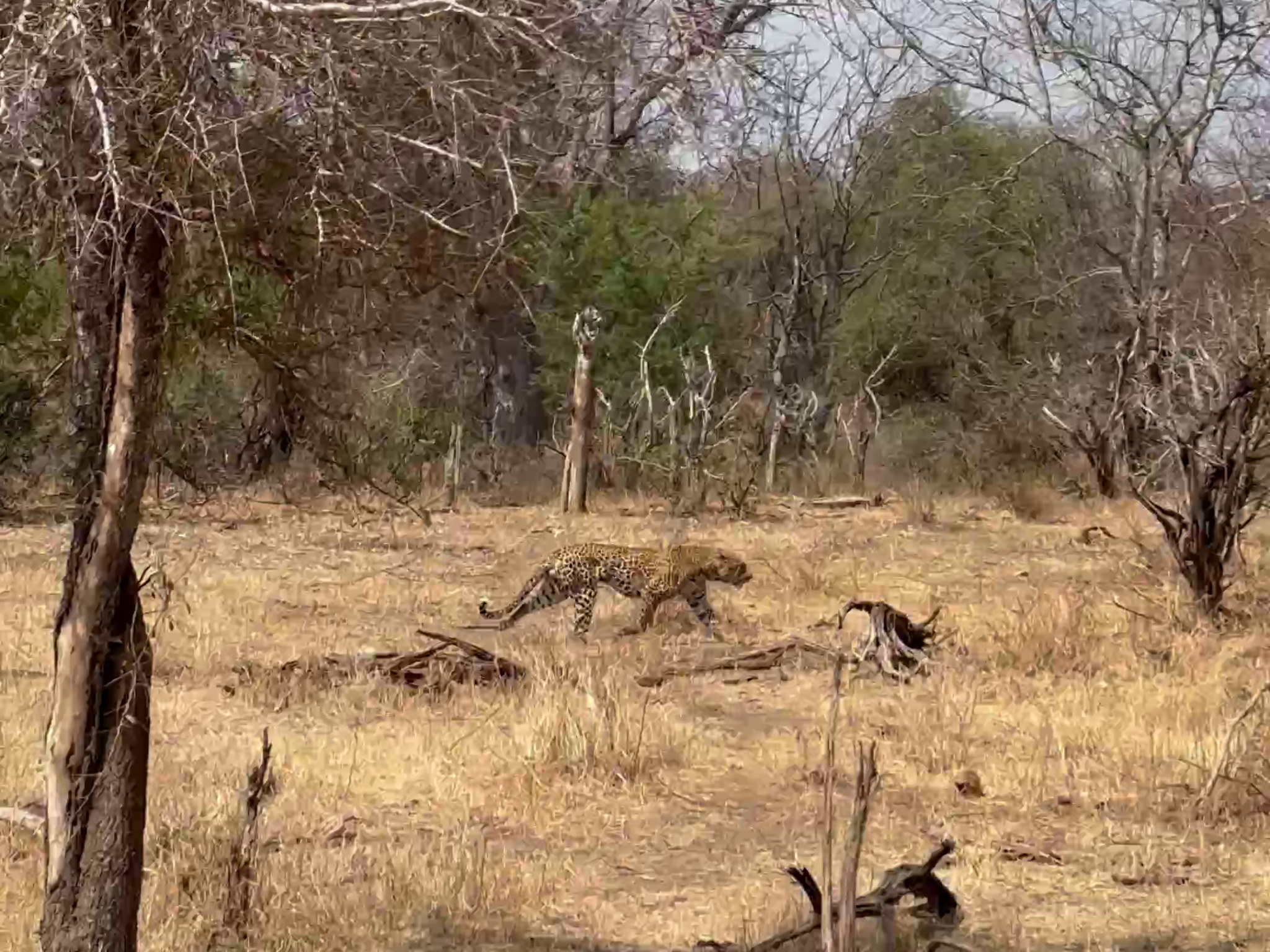
So they act.
Together.
They shout, chase, and pressure the predator, driving it further and further from their territory. Their courage grows in numbers. Individually vulnerable, collectively formidable.
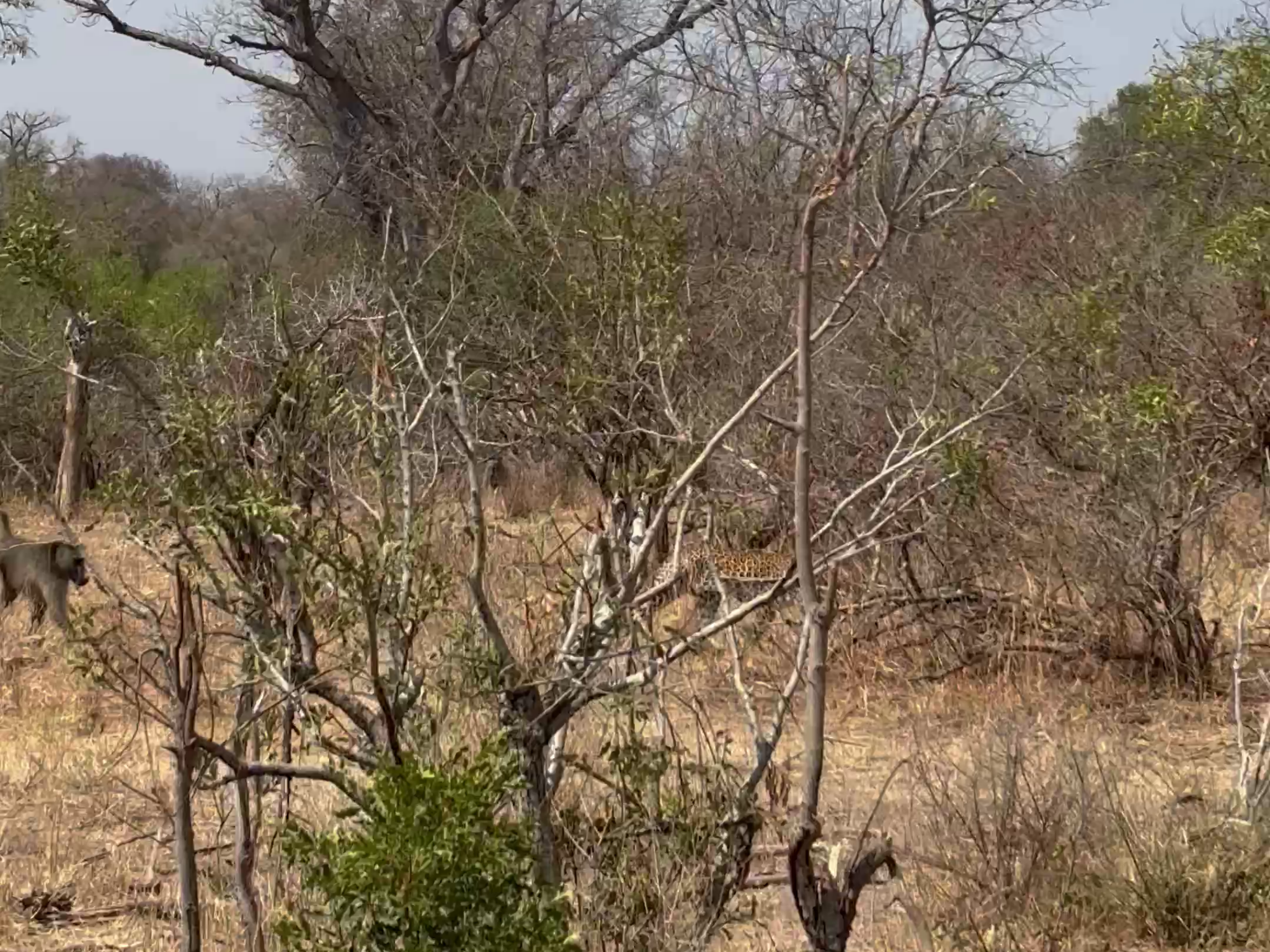
At one point, the baboon gets dangerously close—close enough for a fight that could end in tragedy for either side. Both animals are powerful, armed with sharp teeth and raw strength.
But the leopard hesitates.
It knows the truth.
One baboon is a risk. A troop is a death sentence.
It ignores the safety of nearby trees—places it would normally escape to—because even there, the baboons can follow. There is no easy refuge today.
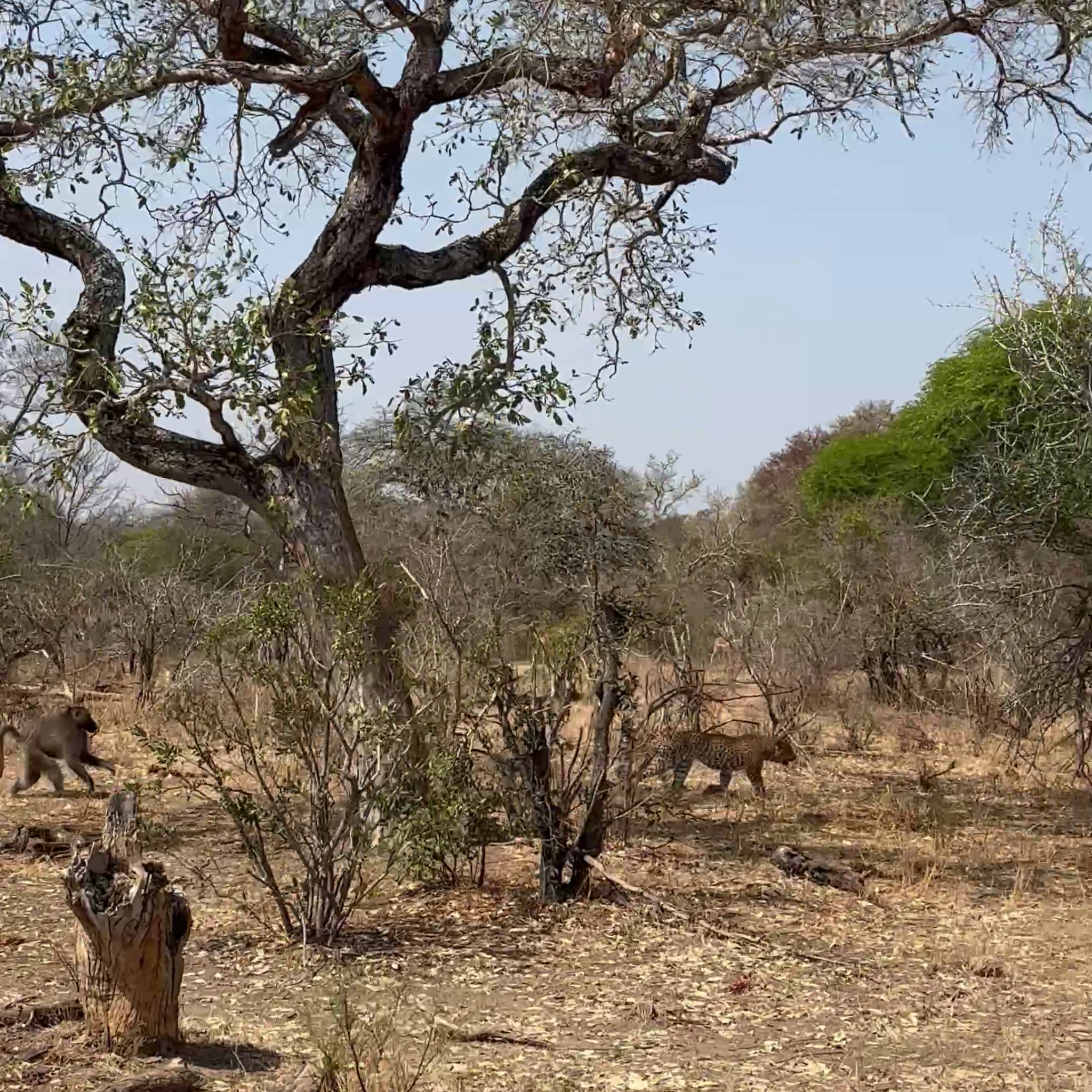
Only distance.
Only survival.
The chase continues, dust rising, tension unbroken, until both disappear into a gully—leaving the outcome unknown.
