Across the vast savannas of East Africa, the great wildebeest migration unfolds like a moving river of life. Each year, enormous herds travel in search of fresh grazing land, guided by instinct and the promise of rain-fed grass.

Their journey leads them to one of the most dangerous obstacles in the wild — a wide, fast-flowing river filled with hidden threats. Beneath the surface, massive crocodiles wait patiently, ready to strike at any animal that ventures too close.
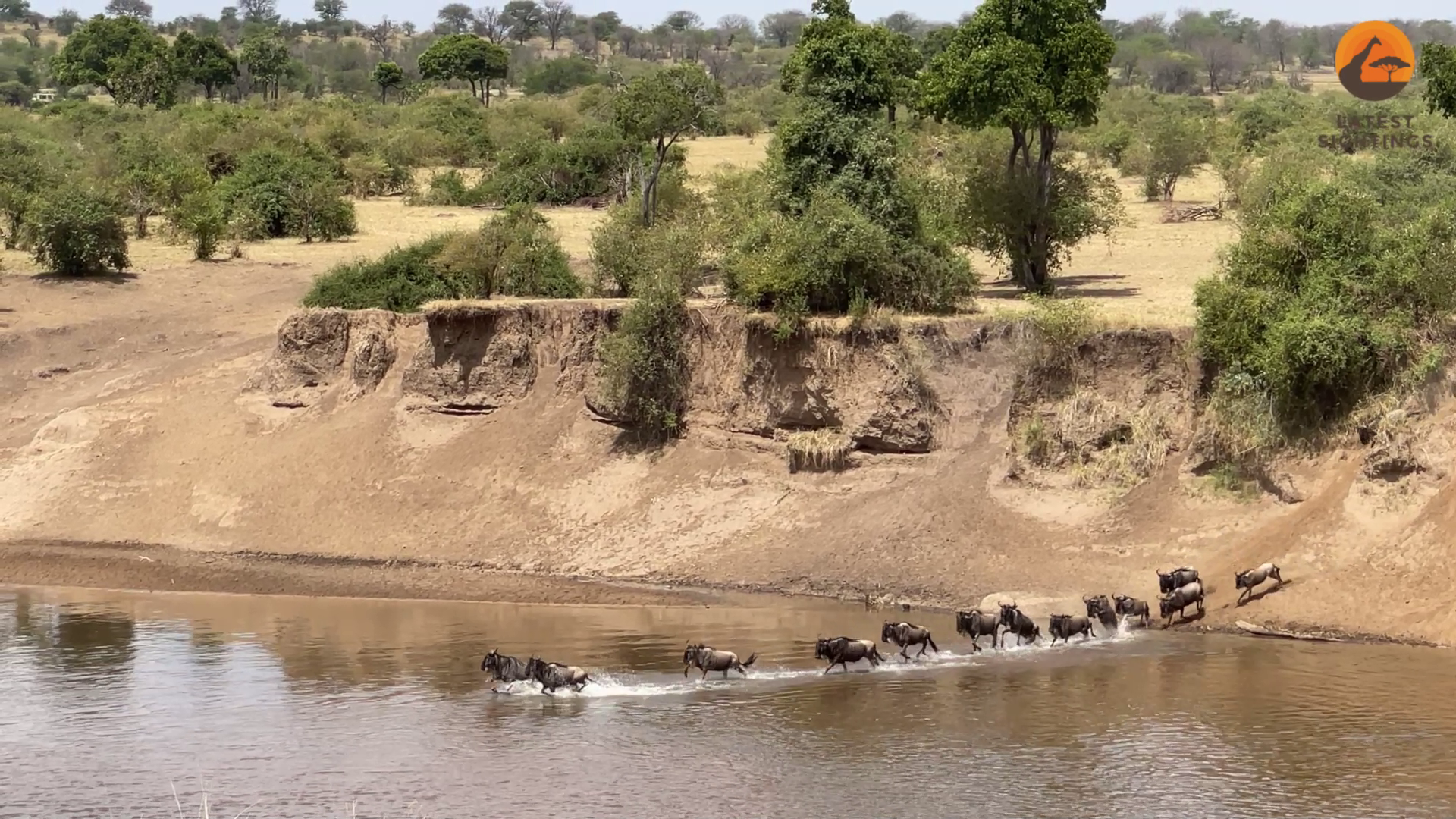
At the river’s edge, the wildebeest hesitate. The water looks calm, but danger lurks below. For long moments, the herd gathers, restless and unsure. Then, driven by pressure from behind and the need to move forward, the first animals leap into the current.
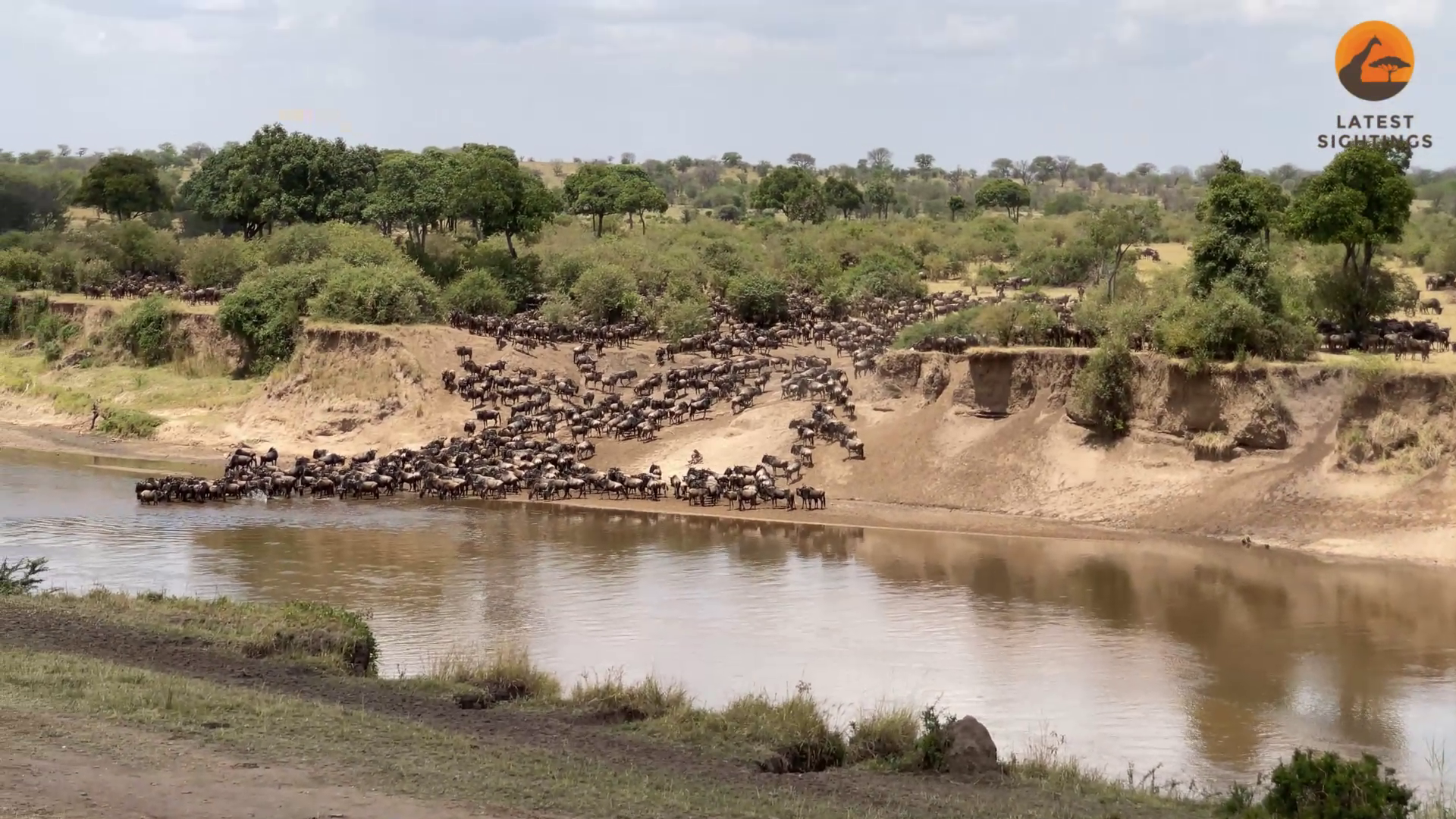
Suddenly, the river comes alive with splashing hooves and panicked calls. Some wildebeest swim strongly toward the opposite bank, while others struggle against the current. Young calves and weaker animals face the greatest risk, often becoming separated from the safety of the herd.
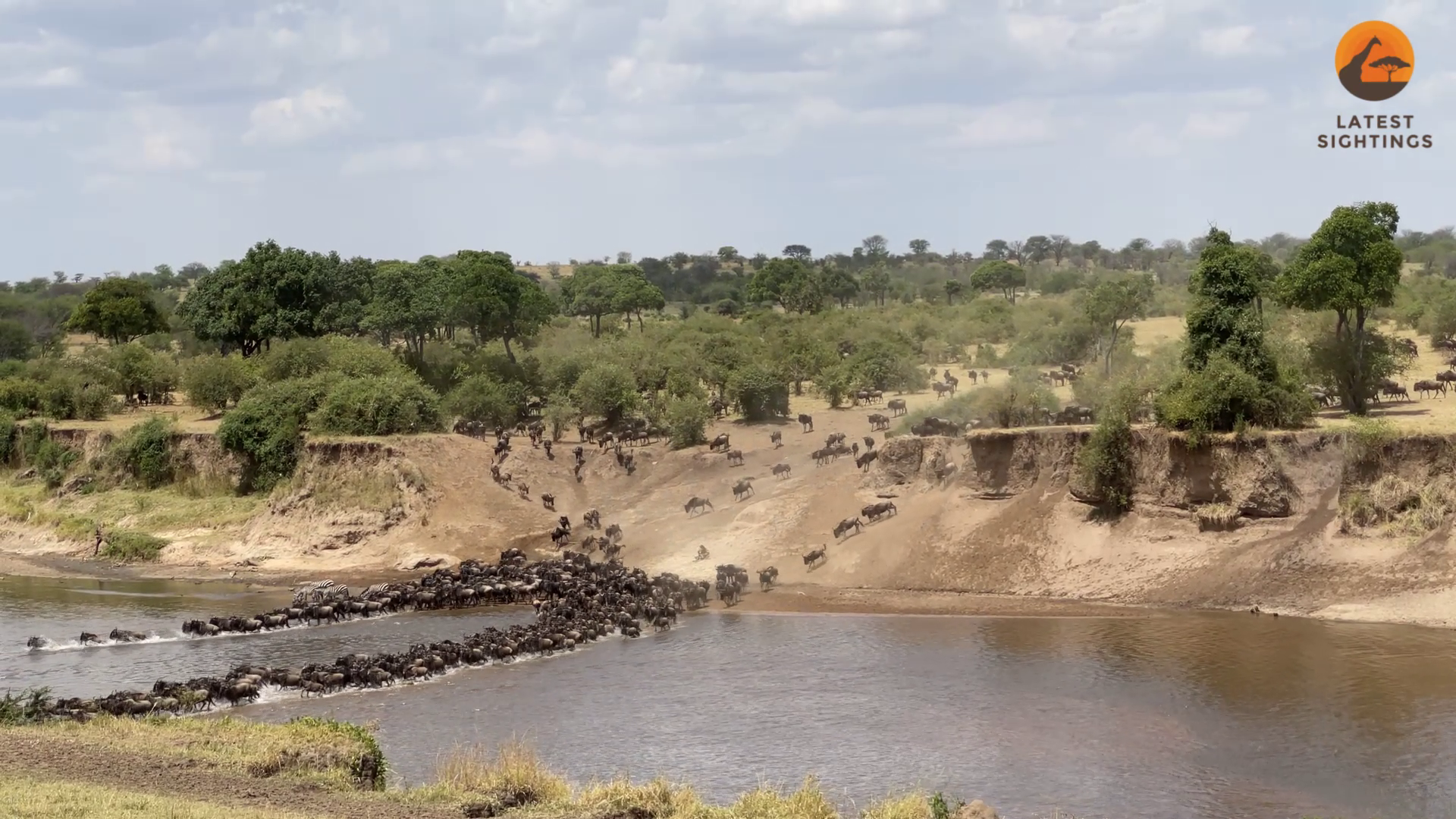
Crocodiles seize their chance, launching powerful attacks in the chaos. Yet the migration does not stop. The surviving wildebeest climb out of the water and continue their march, dust rising as thousands more follow.
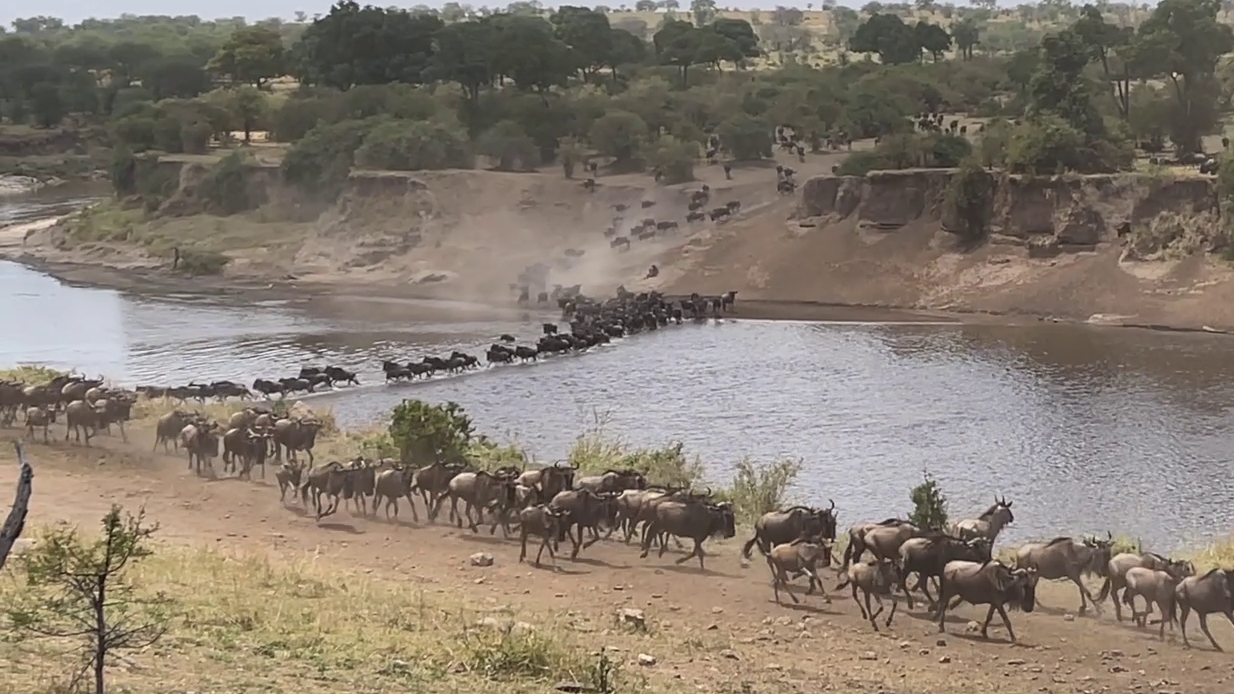
This dramatic crossing is not just a moment of danger — it is a vital part of the wildebeest’s timeless journey. Through courage, instinct, and sheer numbers, they push forward, proving once again that survival in the wild demands both risk and resilience.
