When a predator passed by, there was little that a tortoise could do but hope for the best. Thankfully for the tortoise, the predators had bigger dinner plans.

Pieter van Wyk sent this video to Latest Sightings. He filmed the encounter at MalaMala in South Africa’s Sabi Sands Game Reserves.
Courting tortoises
As the video begins, we see a pair of tortoises walking across a dry riverbed. Typically solitary, it is unusual to see more than one tortoise at a time.
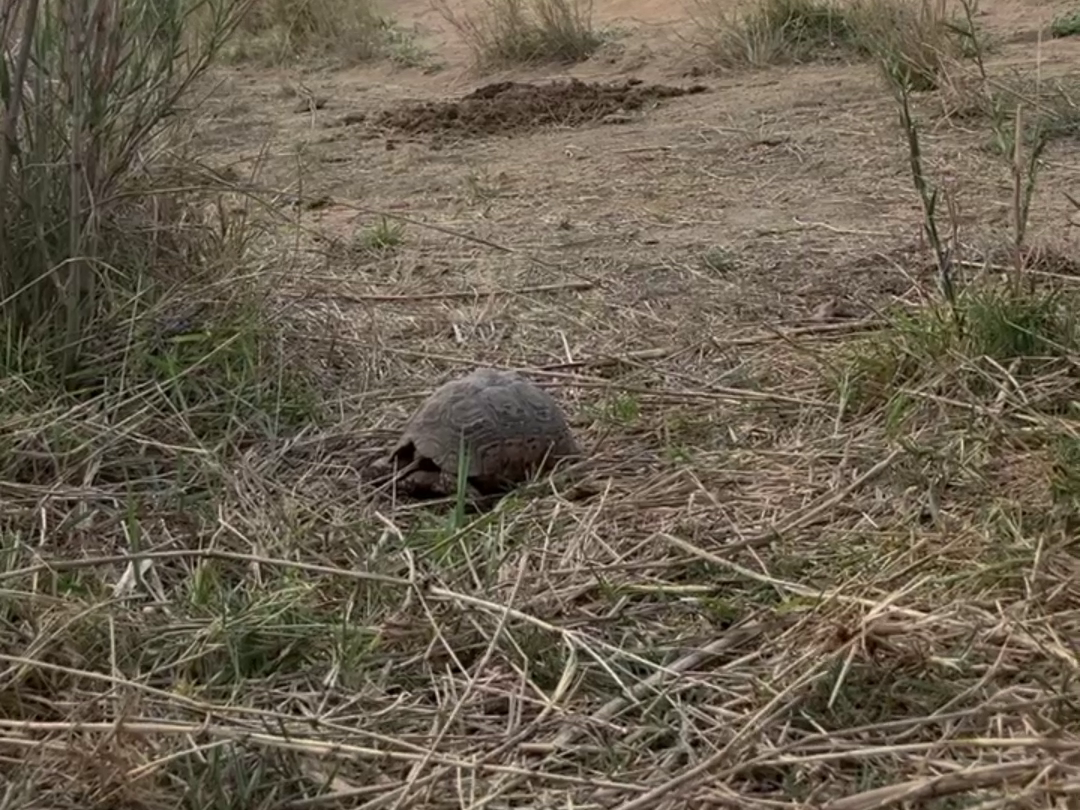
The exception is during mating season, when males actively track the scent of receptive females. But more about that later.
Passing predator
As Pieter zooms out, we hear someone say, “Here he comes,” over the two-way radio rangers use to communicate. Then, entering the frame from the right, we see something large approaching.
It is a male lion, who, it would seem, Pieter and his colleagues had been waiting for. Male lions spend a large percentage of their time patrolling their territory, either alone or with other males if they are part of an alliance.
Prime condition
As the lion comes fully into frame, we see that he is in his prime, with the scarring of past battles plainly visible on his face. Weighing up to 250 kilograms, male lions can tackle buffalo bulls.
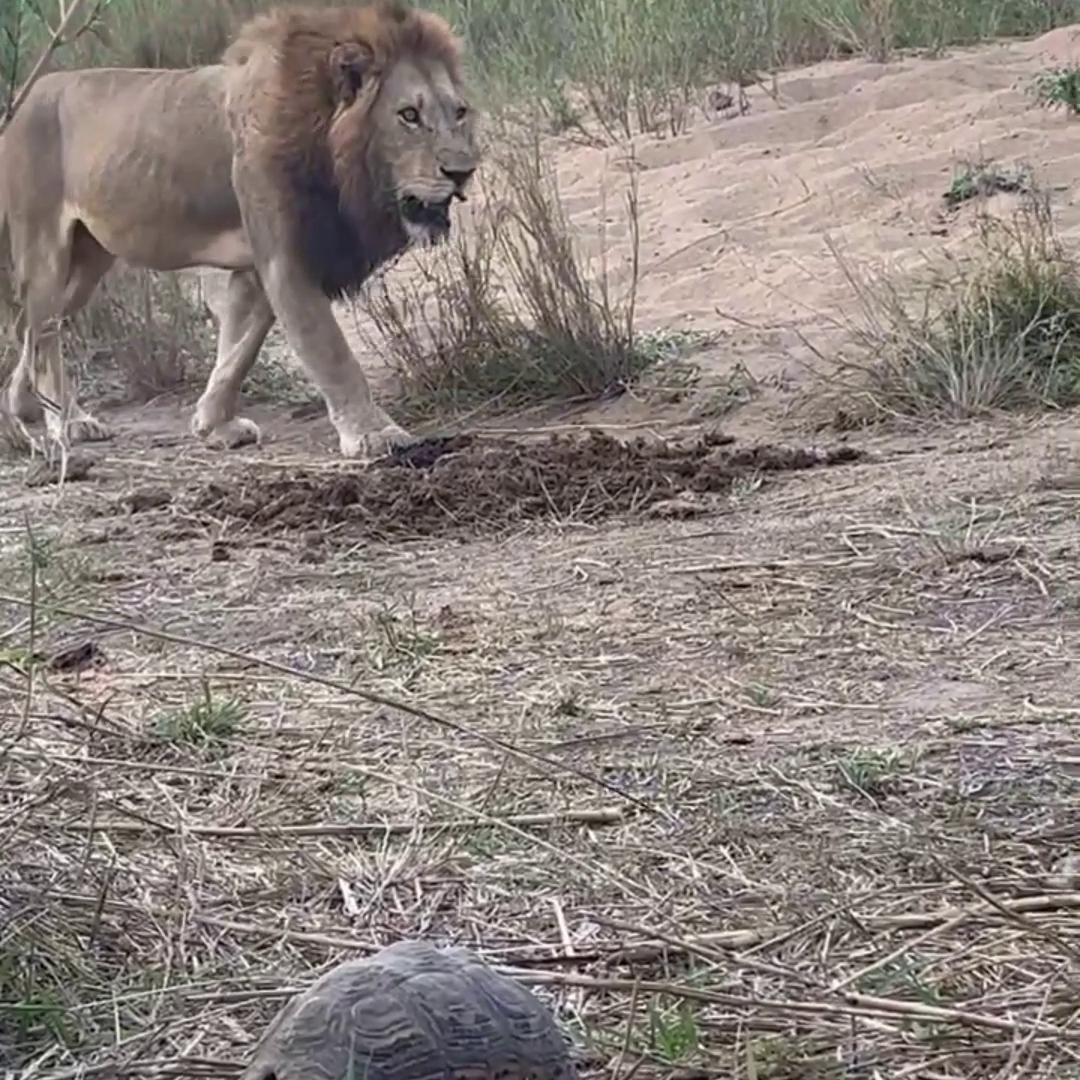
At this stage, he has not noticed the tortoise and seems intent on simply walking by Pieter’s position.
Spotted!
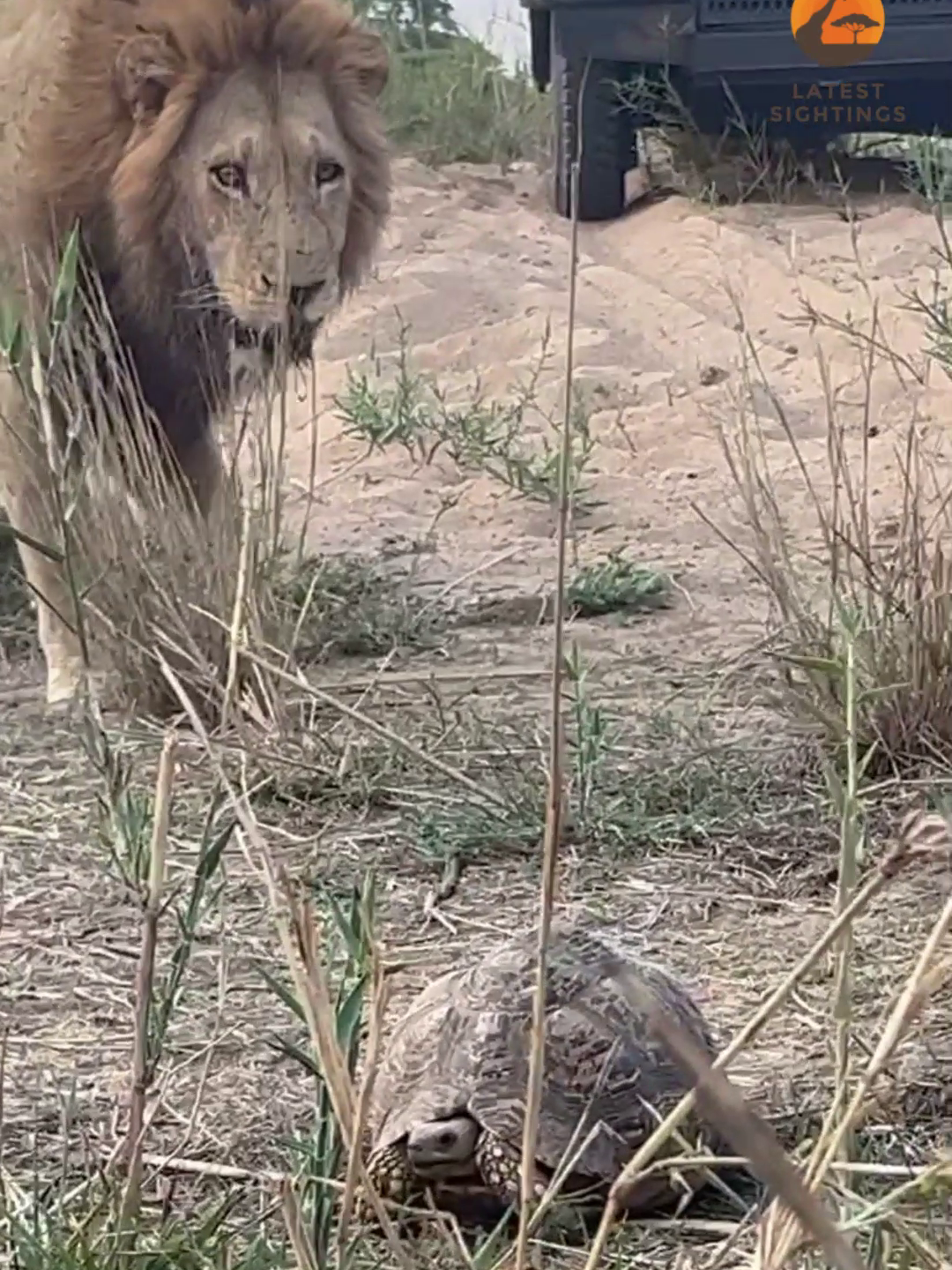
Then, as the lion gets closer, he sees movement in the corner of his eye, and turns his head to take a closer look. He has spotted the second, presumably male tortoise as it slowly pursues its love interest.
Like most predators, a lion’s hunting instinct is stimulated by any movement. Accordingly, the lion stops to properly investigate the strange moving shape before him.
Ignorance is bliss
As for the tortoise, it has other things on its mind and appears blissfully unaware of the potential danger standing just metres behind it.
If anything, it is the massive lion who looks more bothered, with his eyes wide open and brow curiously furrowed. He may well have come across a tortoise before, but perhaps from that angle he can’t quite fathom this ‘moving rock’.
Pause for thought
Subsequently, the lion seems to lose his train of thought. Pausing for a moment, he gathers his thoughts, perhaps debating whether a closer inspection of the tortoise is required.
Although the tortoise’s shell offers solid protection on top, the lion could kill it by tearing open the softer underside. The question is, does he want to? Is it worth the effort for such a small morsel when he can eat up to 40 kilograms of meat at a time?
Moving on
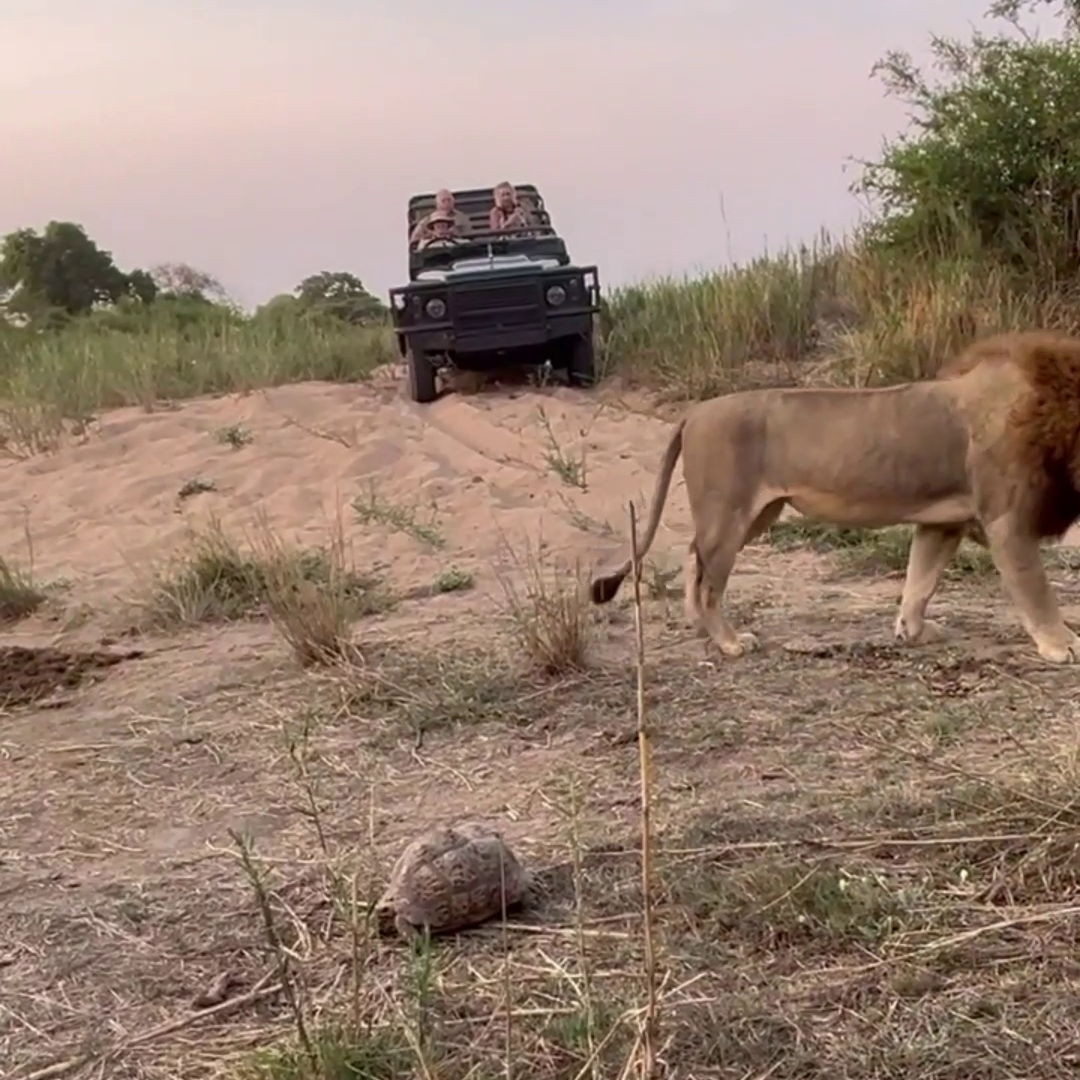
Ultimately, the lion decides to continue on his way. The tortoises may not have realised how close they came to having their romantic interlude interrupted.
Tortoise mating behaviour
Once a male has successfully tracked a female he will signal his desire to mate by bobbing his head. He may ram her until she allows mating to take place, if this is ignored.
Mating is a vocal affair, with the male grunting and wheezing throughout. To facilitate copulation, the male’s belly plate is slightly concave, and he hooks his long tail under her carapace to ensure she doesn’t wander off.
Females lay up to seven clutches of eggs per season, each with up to 30 eggs. Incubation lasts from 8–15 months, depending on the ambient temperature, after which the babies emerge fully independent.
