When visitors to Kruger National Park saw a dead antelope, they didn’t have to wait long for a scavenger to arrive.

Visitor Daniela Talamantes filmed this incredible sighting while on a game drive in the southeastern part of Kruger. She noticed something lying on the ground — on closer inspection, it was a dead impala ram. There were no obvious signs of predators, so how the antelope died remains a mystery.
As Daniela zoomed in with her camera, she realized an animal was near the carcass. Its distinctive black and white coat identified it as a honey badger. Delighted with the discovery, she began filming. To her surprise, the badger was actively feeding on the impala.
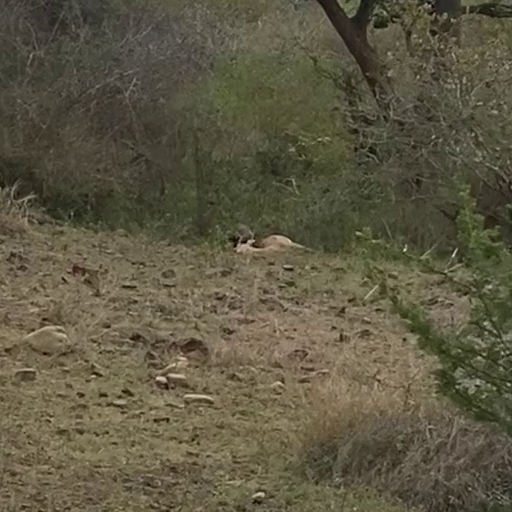
It is rare enough to see a honey badger in the wild, but to witness one scavenging was extra special for Daniela. As she watched, the badger appeared to be chewing on the back of the impala’s neck. From time to time, it lifted the ram’s neck and head with its powerful jaws.
While it’s possible the badger may have killed the antelope, no one saw how the impala died, so this can only be speculation.
Honey badgers are omnivores, eating a wide variety of foods including fruits, honey, insects, rodents, reptiles, and small to medium-sized mammals. Regarding impalas, they typically target juveniles or individuals that are injured or weakened.
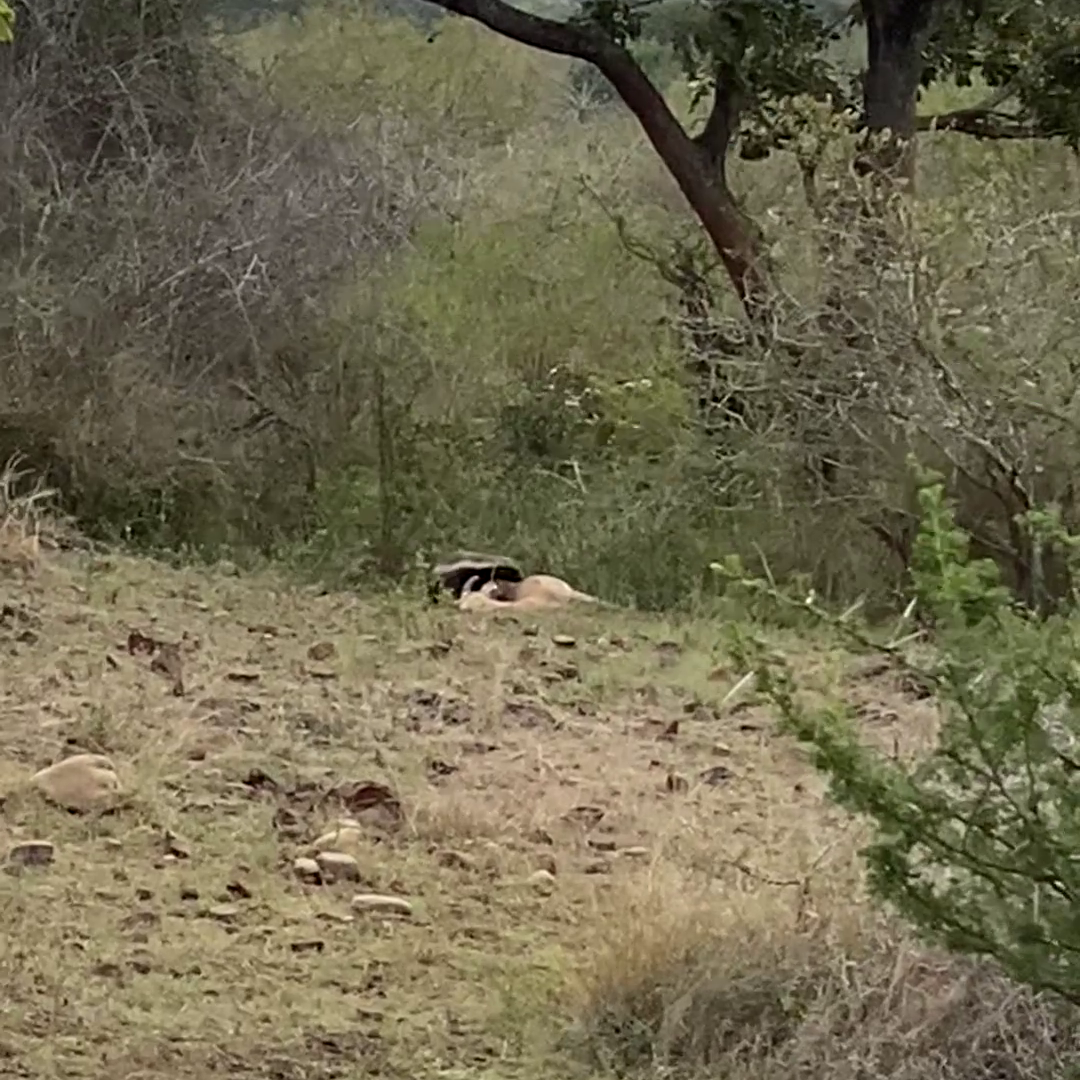
Every so often, the honey badger paused feeding and looked toward Daniela and the other visitors. Honey badgers have relatively poor eyesight, so it was likely trying to locate the source of the voices. Despite this, the noise did not seem to frighten it off.
Honey badgers are known for their fearlessness. They will defend themselves against almost any creature that dares to challenge them — including large predators such as leopards, lions, hyenas, and even elephants.
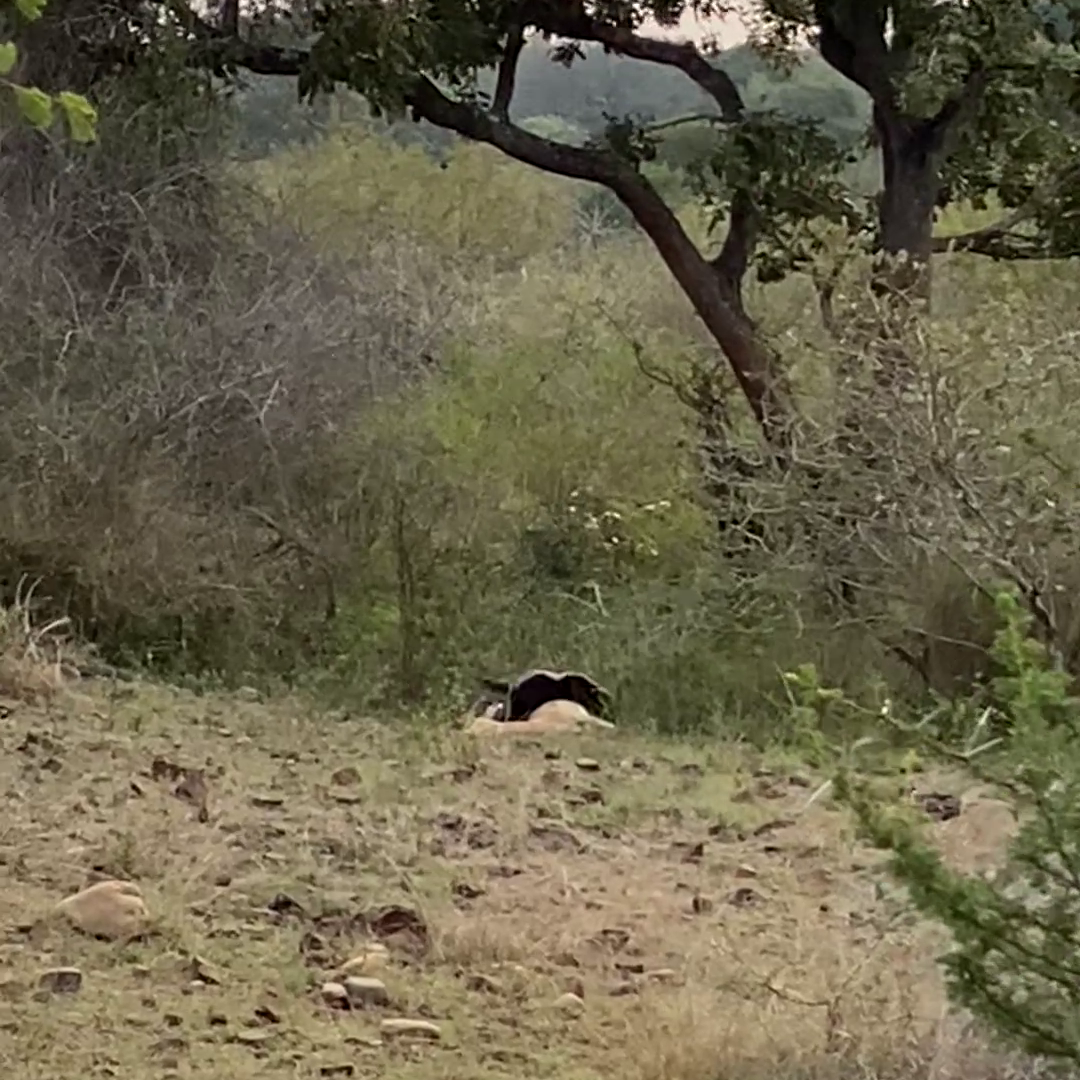
After feeding on the neck for a while, the badger seemed to decide to look for a fleshier part of the impala to feast on. As it moved around the carcass, it displayed its distinctive high-contrast markings — a natural warning to other animals to keep their distance.
This remarkable scavenging sighting offered a rare glimpse into the opportunistic behavior of honey badgers and their adaptability in the wild.
