A rare and unforgettable moment unfolded on the open plains of Sabi Sabi when a ranger encountered something extraordinary among a small herd of zebras—a foal that looked almost completely white.
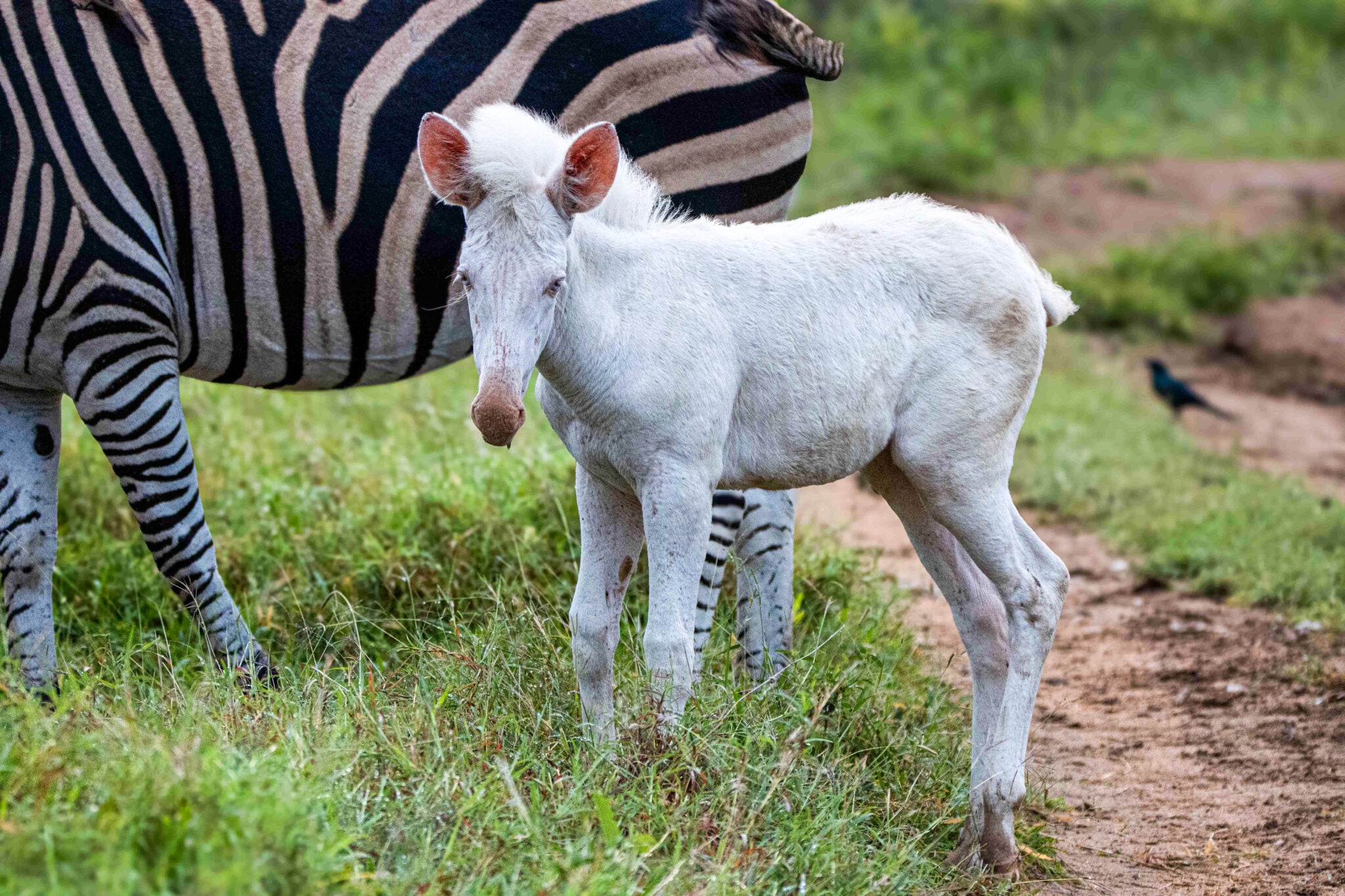
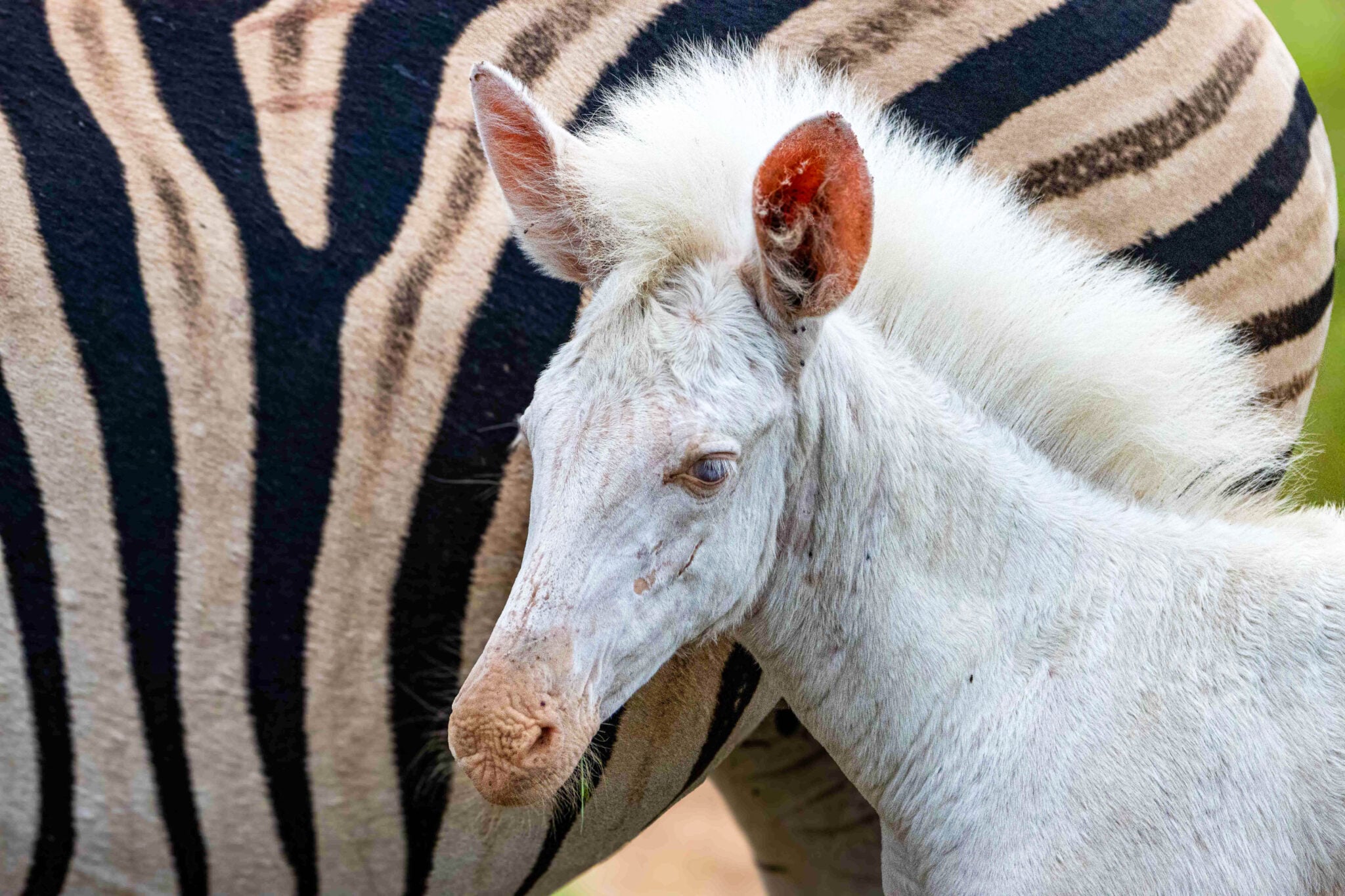
At first glance, the young animal seemed to glow against the green savanna. Walking closely beside its mother, the foal stood out dramatically from the rest of the herd, whose bold black-and-white stripes contrasted sharply with its pale coat. Its markings were so faint they were barely visible, making it one of the most unusual zebra sightings imaginable.
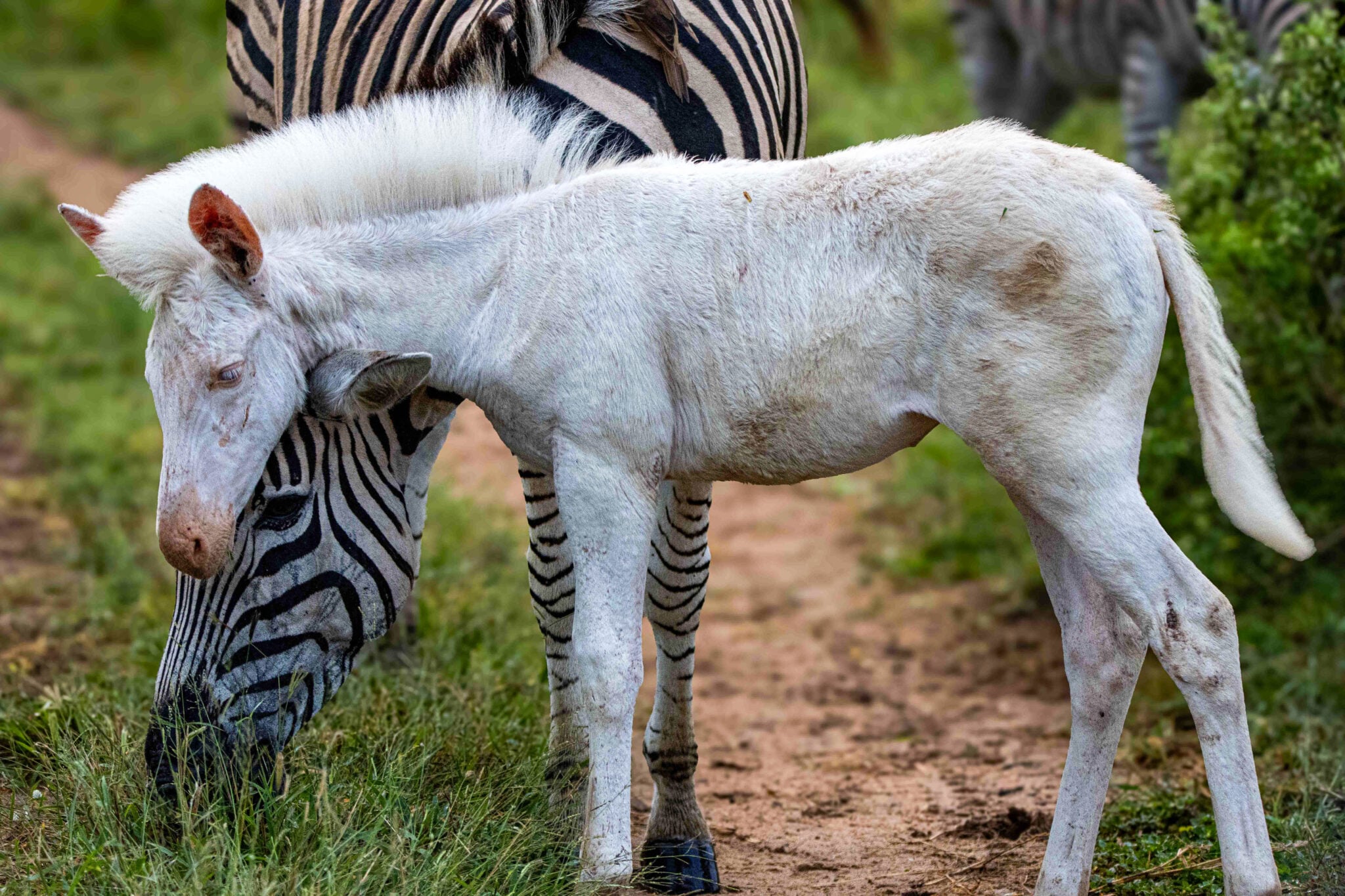
This striking appearance is believed to be caused by leucism, a rare genetic condition that results in partial loss of pigmentation. Unlike albinism, leucism does not completely eliminate melanin, so animals can still have normal eye color while their bodies appear unusually light.
Zebra stripes are far more than just a beautiful pattern—they play an important role in survival. When zebras move together, their stripes create a confusing visual effect that makes it difficult for predators to single out one individual. Without this natural camouflage, a pale foal may be more visible in the open landscape and potentially more vulnerable.
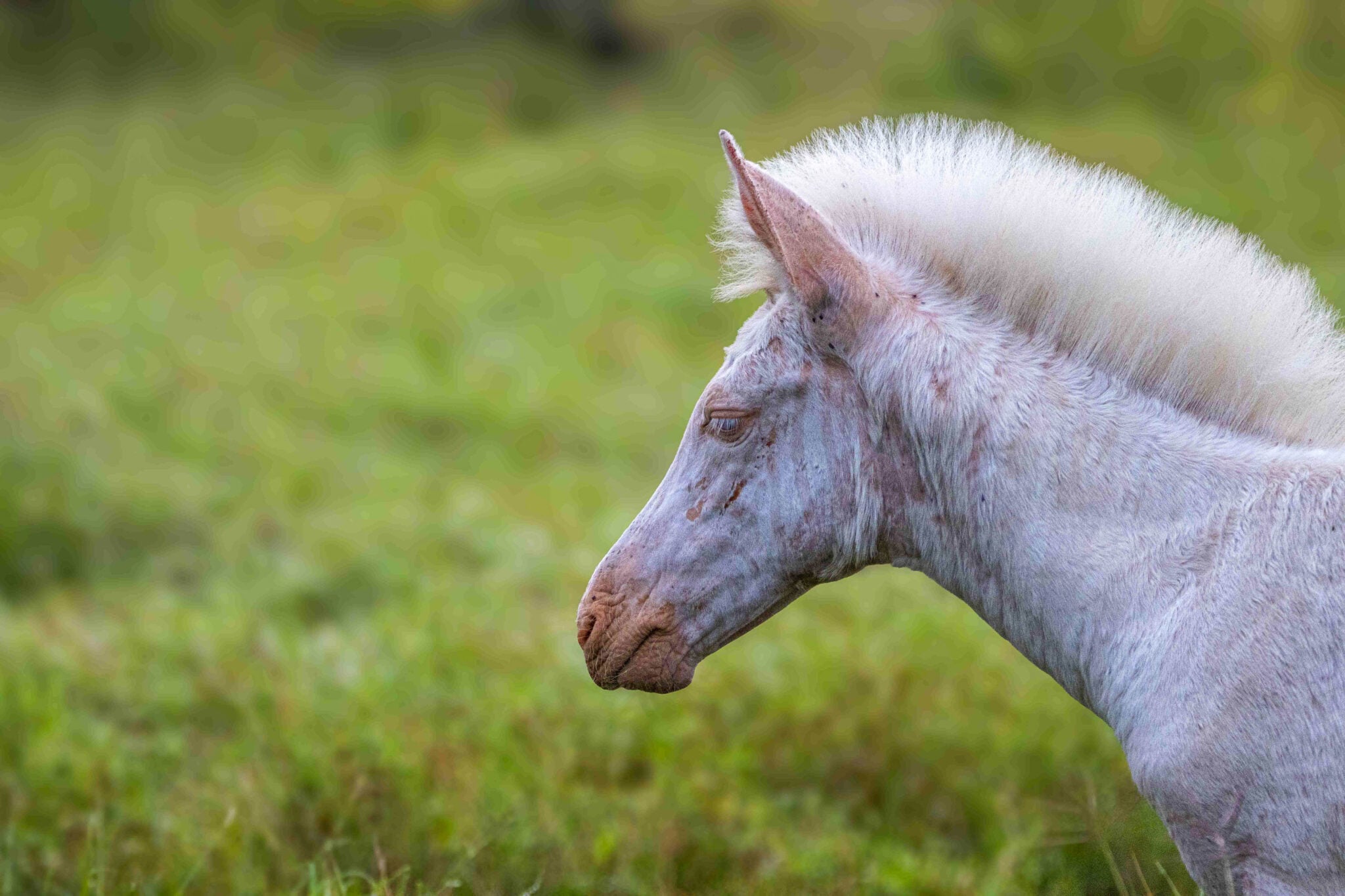
Despite this disadvantage, the young zebra showed no signs of distress. It calmly grazed, nudged its mother, and stayed close to her side as the herd moved together. The other zebras appeared completely unbothered, treating the unusual foal just like any other member of the group.
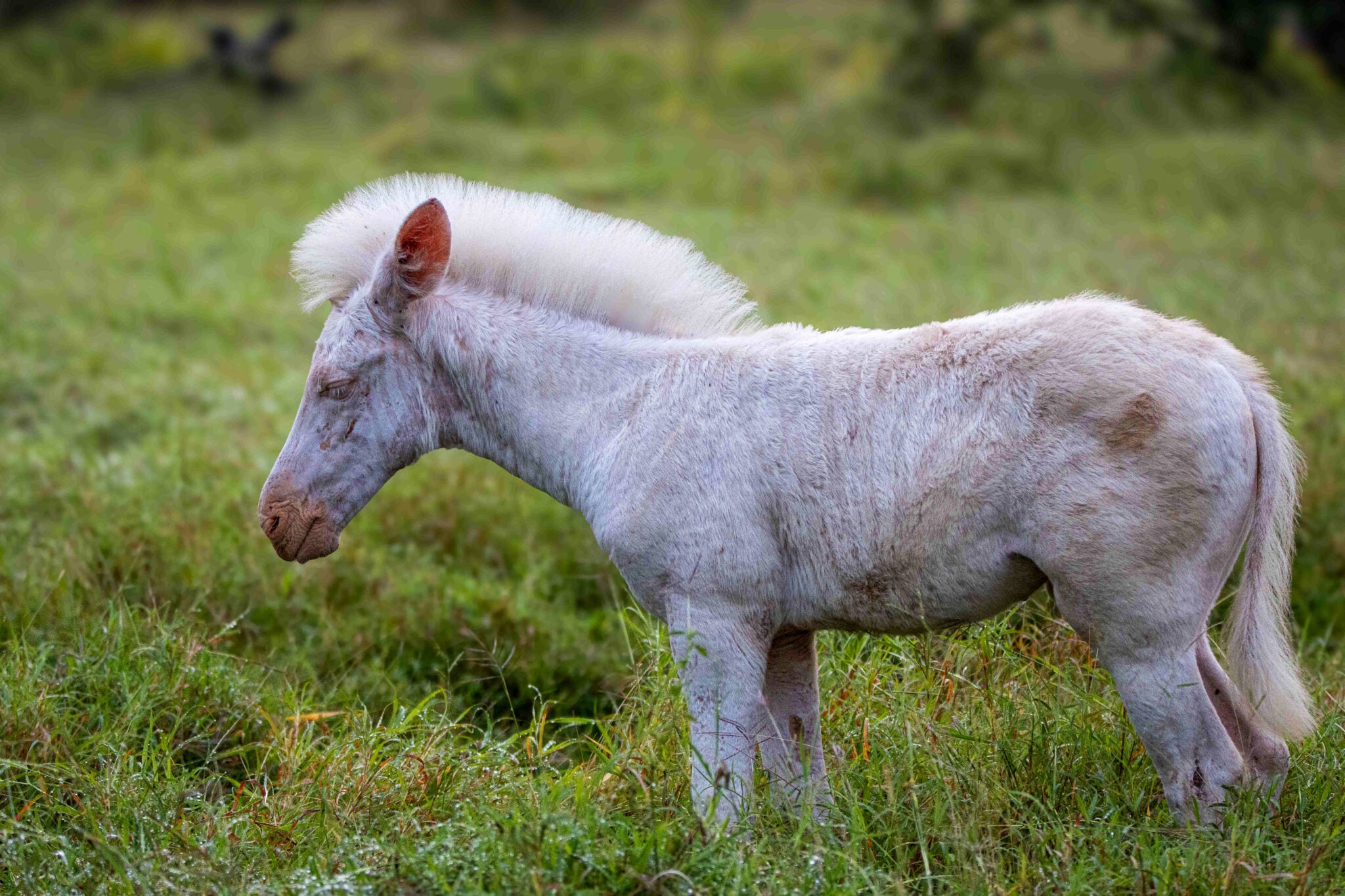
Sightings like this are incredibly rare, with only a handful ever recorded in the wild. For researchers, each encounter offers valuable insight into genetic variation and how such traits appear in natural populations.
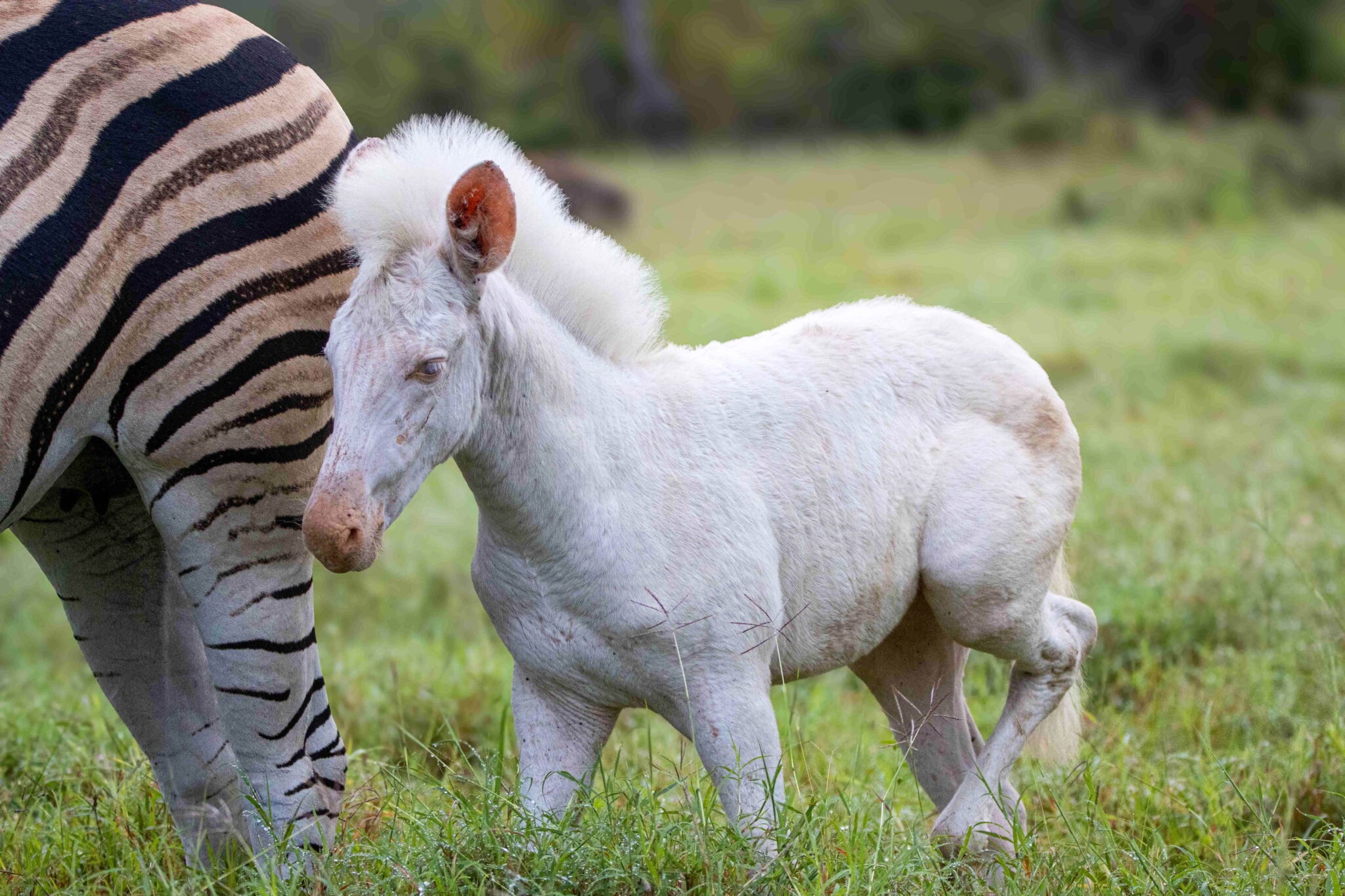
For those lucky enough to witness it, the moment was both quiet and powerful—a reminder that even the most familiar animals can still surprise us. A small, pale foal walking gently beside its mother became a living example of nature’s unpredictability and beauty.
